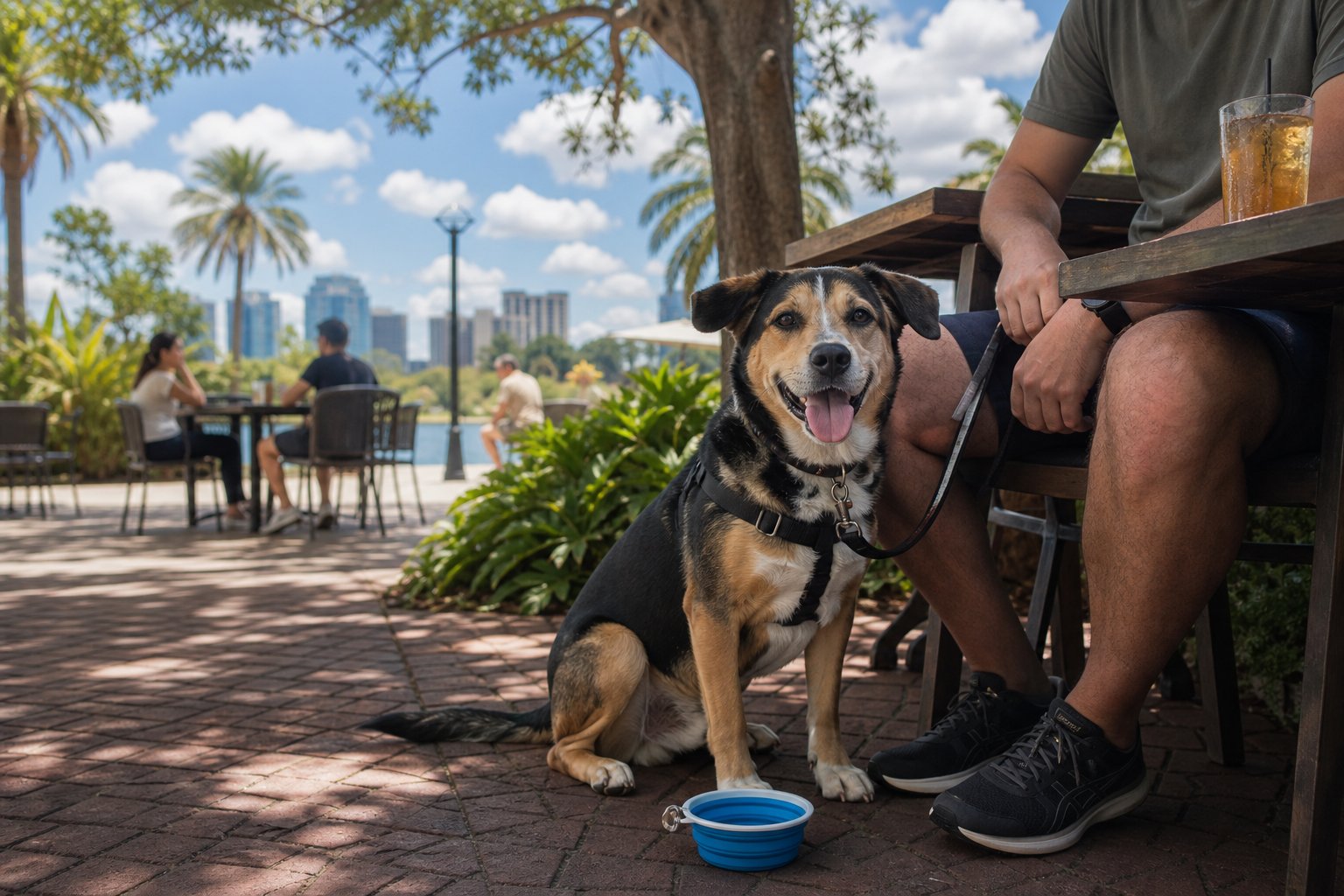
Orlando is easy to enjoy with a dog. Fenced dog parks, leashed walks on lakefront paths and rail-trails, and outdoor patios at restaurants and taprooms are the main pet-friendly options, and the weather allows all of them for most of the year. The catch is the Florida climate: heat, alligators near fresh water and year-round mosquitoes shape how you use these places. This guide covers dog parks, dining with a dog, things to do, heat and parasite safety, vets and adoption.
Dog parks in Orlando and places to run
The area has a solid spread of dedicated dog parks where pets can play off-leash, usually with separate areas for large and small dogs and shaded spots to cool off. Beyond the fenced parks, many of the region's larger green spaces and lakefront paths welcome leashed dogs, which makes a morning walk pleasant. The paved rail-trails that cut through the suburbs are especially good for longer outings, since they are flat, shaded in stretches, and go on for miles. Florida leash rules are taken seriously in most public spaces, so keep your dog leashed anywhere that is not specifically an off-leash area. Each park sets its own hours and rules, so check the posted signs or the managing city or county page before your first visit.
- Dedicated dog parks offer fenced, off-leash areas separated by dog size.
- Lakefront paths and neighborhood parks welcome leashed dogs for everyday walks.
- The region's paved rail-trails are ideal for longer, low-traffic outings.
- Early morning and evening are the safest times to walk in the warmer months.
For a closer look at the city's green spaces, see the guide to the best parks and lakes in Orlando and the overview of outdoor activities in Orlando: parks, trails and wildlife. Rules for dogs differ from one park or trail to the next, so confirm them before you go.
Pet-friendly restaurants in Orlando: how dogs are allowed on patios
The year-round patio weather means a lot of Orlando businesses welcome dogs. Plenty of restaurants and cafes allow well-behaved dogs on their outdoor patios, and the local brewery scene is dog-friendly, with many taprooms keeping a water bowl by the door. Outdoor shopping and dining districts around the metro tend to be relaxed about leashed pets strolling through.
There is a legal reason dogs are limited to patios. Under Florida Statute 509.233, a city or county may, by ordinance, let restaurants apply for a permit to allow patrons' dogs in a designated outdoor area. Adoption is voluntary for each local government, and an establishment needs its own permit.
The state conditions on those permitted areas give you a sense of what to expect:
- Dogs must be leashed at all times and under reasonable control.
- Dogs must stay off chairs, tables and other furniture.
- Dogs cannot pass through indoor areas, so the patio must have its own entrance.
- Staff cannot handle dogs while serving food or drinks, and waterless sanitizer must be available at the tables.
In practice, call ahead if you are unsure, since a venue may not hold a permit or may limit hours for dogs. Bring your own water on hot days, and note that the rules are about the outdoor seating only. A quick check of a venue's policy saves an awkward turnaround at the door. For where locals eat across the metro, see the Orlando food scene guide.
Pet-friendly things to do in Orlando
Most pet-friendly activities in Orlando are outdoors and leash-based. Good options for a day out with a dog include:
- Walking lakefront paths and neighborhood parks.
- Longer rail-trail outings in the morning or evening.
- Visiting dog-friendly patios, taprooms and open-air shopping districts.
- Taking a day trip, since dog rules vary at each destination; the list of day trips from Orlando is a starting point for planning.
Check each attraction's pet policy before you travel. Many venues, including some natural areas, restrict or prohibit dogs, and a policy can change.
Is Florida heat safe for dogs? Climate hazards to know
The same warm weather that makes Orlando great for pets also brings real hazards, and newcomers should take them seriously. Heat is the big one: pavement gets hot enough to burn paw pads, and dogs can overheat fast, so walk during the cooler parts of the day and never leave a pet in a parked car. The guide to surviving an Orlando summer covers heat and storm season in more detail.
Florida's many lakes and ponds can harbor alligators, so keep dogs leashed and well back from the water's edge, especially at dawn and dusk. The humid climate also keeps fleas, ticks and mosquitoes active year-round, which makes consistent preventive treatment more important here than in colder states.
Heartworm, spread by mosquitoes, is a genuine concern. The American Heartworm Society recommends giving preventive 12 months a year, including to indoor pets, and testing dogs every 12 months. Ask a vet which product suits your dog.
Vets, emergency care, and grooming
Building a relationship with a local veterinarian early is one of the first things to do after moving, ideally before you need one in a hurry. The metro has a wide range of general practice clinics, and there are dedicated emergency and specialty animal hospitals that operate around the clock for after-hours crises. It is worth knowing where the nearest emergency hospital is before an emergency happens, the same way you would know the nearest urgent care for yourself. Grooming, boarding, and daycare options are plentiful across the suburbs, so you will not struggle to find care when you travel or need a wash.
Adopting a pet and getting settled in Orlando
If you are looking to add a pet rather than relocate one, the region has numerous animal shelters and rescue organizations, and adoption is a great way to start. Orange County Animal Services runs the county shelter on Conroy Road in Orlando, and its website lists animals currently available. Hours change, so check its site before you visit.
Florida requires dogs, cats and ferrets to be vaccinated against rabies, according to the Florida Department of Health, and the local counties and cities may add licensing rules. Register your pet and keep its shots current to stay compliant; the county animal services office can confirm what applies where you live.
Microchipping is strongly recommended in a place with this much foot traffic and this many visitors. Orange County Animal Services notes that a chip is not a GPS tracker and can only be read by a scanner at close range, and that the number must be registered to you and updated when you move or change phone numbers. Its page cites studies in which microchipped pets were returned to owners far more often than unchipped ones (52.2% against 21.9%). If you are still settling in, the local living guide for moving to Orlando covers the rest of the move.
Frequently Asked Questions
Are dogs allowed inside Orlando restaurants?
Generally no. Dogs are allowed only in designated outdoor areas, and only where the local government has adopted an ordinance and the restaurant holds a permit (Florida Statute 509.233). Call the venue to confirm that its patio allows dogs.
Do dogs have to be on a leash in Orlando parks?
Yes, except inside areas that are specifically designated off-leash, such as fenced dog parks. Keep your dog leashed on trails, lakefront paths and in general park areas, and read the posted rules at each location.
Is it safe to walk a dog in Orlando in summer?
It is, if you plan it. Walk early in the morning or in the evening, carry water, avoid hot pavement and never leave a dog in a parked car. Heat can overwhelm dogs quickly, so shorten walks on the hottest days.
Do dogs need heartworm prevention in Florida?
Yes. Mosquitoes are active across most of the year in Central Florida, and the American Heartworm Society recommends preventive medication 12 months a year plus an annual test for dogs. Your vet can set up the schedule.
Can I let my dog swim in Orlando lakes?
It is risky. Florida lakes and ponds can hold alligators, especially around dawn and dusk, so keep dogs leashed and away from the water's edge unless a posted, designated swim area for dogs exists.