
For most of its history, Orlando's culinary reputation ended at the theme park entrance. You ate at the resort, or you drove somewhere vague and hoped for the best. That era is over. The 2026 MICHELIN Florida Guide recognizes 61 Orlando-area restaurants - one Two-Star, five One-Stars, 14 Bib Gourmands, and 41 Recommended spots - the strongest showing the city has had since MICHELIN entered Florida. Those restaurants are not in Orlando despite the theme parks. They exist in the neighborhoods that grew up independent of them: Mills 50, Audubon Park, Baldwin Park, Thornton Park, and a constellation of adjacent districts that sit within roughly five miles of each other. A serious, locally-rooted dining day is not only possible here - it is practical in a way it wasn't five years ago.
This guide is organized by neighborhood because that is how residents eat - by proximity, by parking, by what kind of evening they want. It connects the cultural history behind Orlando's best food corridors to their current character, covers what makes each district worth a separate trip, and includes the seasonal and logistical detail that tourism sites consistently leave out.
Mills 50: Orlando's Culinary Crown
Mills 50 has more MICHELIN Guide-recognized restaurants than any other neighborhood in Orlando. In September 2025, National Geographic named it the most interesting neighborhood in Florida. Neither of those facts arrived from nowhere, and the two are not unrelated.
The neighborhood developed through Vietnamese immigration beginning in the 1970s. Refugees resettling in Central Florida established businesses along the Mills Avenue and Colonial Drive corridor - not as a restaurant district aimed at outsiders, but as a commercial strip serving a community. Decades of that investment created an ecosystem dense enough to sustain serious culinary culture: pho shops, bánh mì counters, Asian grocers, and eventually the generation of chefs who grew up eating in them. The cultural backstory and the MICHELIN density are the same story told twice. One produced the other.
The neighborhood is walkable within its core and mostly free to park near. Come on a Tuesday or Wednesday for the restaurants with regular Friday waits.
- EDOBOY - Japanese rice bowls with a sourcing focus that goes beyond the standard fast-casual template
- Bánh Mì Boy - the sandwich the neighborhood's history made inevitable, done without shortcuts
- Shin Jung - Korean cooking that has served the community long before any guide noticed it
- Zaru - Japanese cuisine in a space that takes the food seriously without making the dining experience feel performative
The district's most distinctive credential is Kaya, which holds Orlando's first MICHELIN Green Star. That award recognizes outstanding commitment to sustainable gastronomy - sourcing, supply chain, and operational choices, not only what the kitchen produces. It places Kaya in a specific global category of restaurants that treat environmental practice as a culinary value rather than a marketing position.
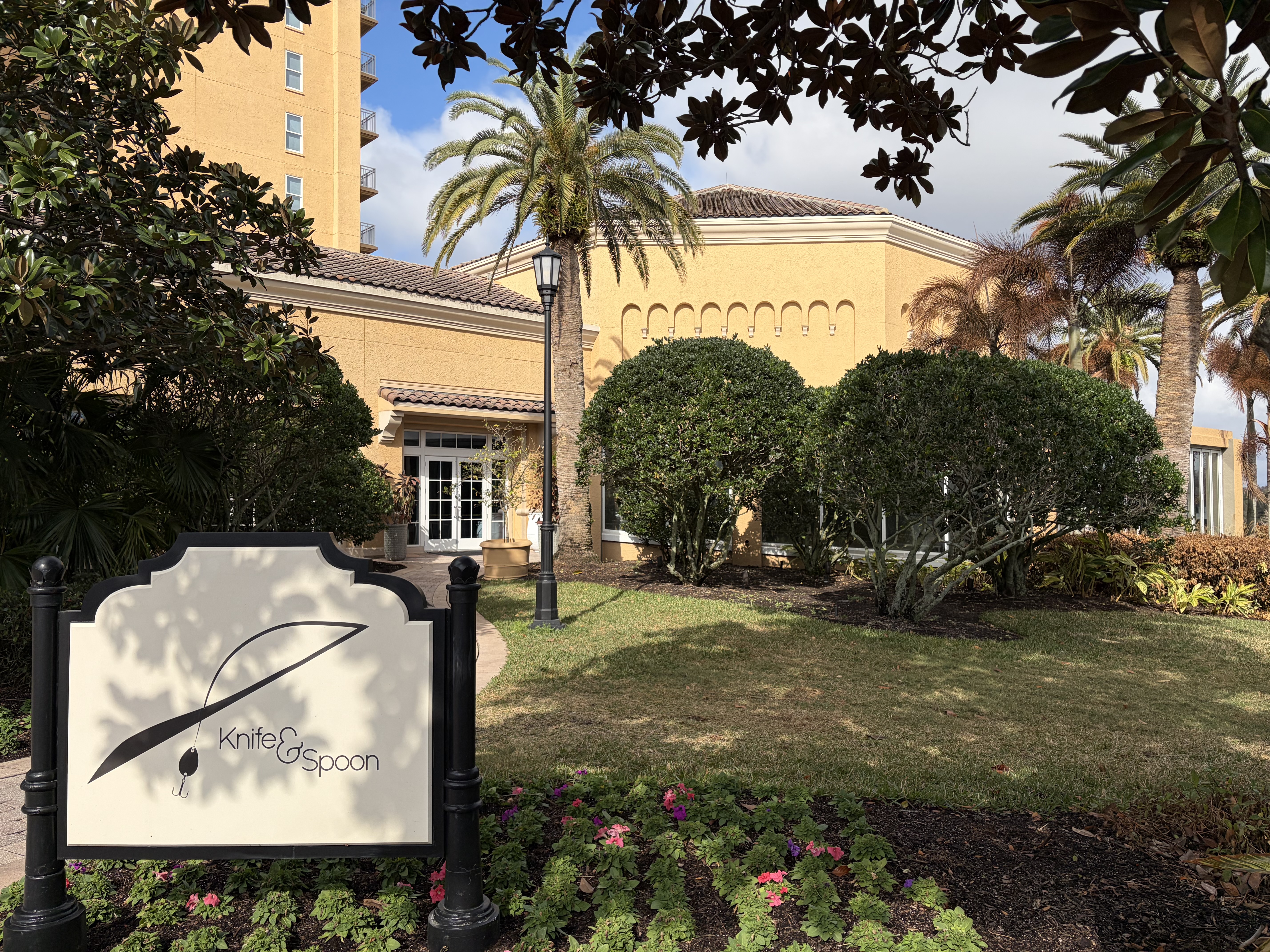
Mills Market and the Food-Hall-as-Neighborhood-Anchor Model
In 2024, restaurateurs Johnny Tung and Cecilia Nguyen converted the former Tien Hung Market supermarket into Mills Market, a food hall that now houses four MICHELIN Guide-recognized restaurants under one roof. Four recognized spots in a single building is unusual anywhere. In a converted Vietnamese supermarket in Central Florida, it signals something specific about the talent density the Mills 50 corridor has accumulated over fifty years.
The conversion itself matters beyond the credential count. Tien Hung Market was already a community anchor - the place where Vietnamese and Asian families shopped for decades. Transforming it into a food hall rather than demolishing it for something generic preserved that connection while updating the function of the space. The result feels rooted in a way that purpose-built food halls rarely do.
Orlando's food hall ecosystem has expanded enough to compare across several distinct models:
| Food Hall | District | Character | MICHELIN Connection |
|---|---|---|---|
| Mills Market | Mills 50 | Converted Vietnamese supermarket, community roots | Four recognized vendors |
| East End Market | Audubon Park | Indie artisan, AstroTurf courtyard, local-producer focus | Incubated names now recognized |
| H Mart food hall | West Colonial | Large-format Asian grocery anchor with multiple vendors | None - different category |
| Boxi Park | Lake Nona | Container park, outdoor entertainment, craft beer | None - district hub role |
| Eola Food Hall | Downtown | Two-story, wine speakeasy, rooftop bar with lake views | Opening soon |
Treating these as interchangeable entries in a listicle misses the point. Each serves a different part of the city and a different kind of visit.
Audubon Park and East End Market: The Indie Food Hub
East End Market was founded by Central Florida native John Rife. The two-story food hall and artisan retail market - with its AstroTurf courtyard - sits on Corrine Drive in Audubon Park and helped establish the stretch as a dining destination when it opened. Rife built it as a platform for local food entrepreneurs, and the format has produced at least one trajectory that now defines how Orlando talks about food-hall incubation.
Gideon's Bakehouse started as a vendor inside East End Market. The bakery built a following on the strength of its oversized cookies, then expanded to other locations - bringing lines that regularly stretch around the block at each one. That arc from market stall to cult destination is exactly what the space was designed to make possible.
- La Femme du Fromage takes cheese and charcuterie seriously enough that it functions as both a retail shop and an education in what the category can be
- The AstroTurf courtyard makes East End a functional outdoor social space, not just a stop for food
- The Audubon Park neighborhood around it rewards walking before or after - the Corrine Drive corridor has its own character separate from the market
The district is drive-to from most of Orlando, but walkable once you arrive. Street parking on Corrine fills on weekends. Saturday morning, when vendors are fully stocked and the courtyard is active, is the peak version of the experience - though it is also the busiest.

Ivanhoe Village, College Park, and the Milk District: Taprooms, Wine Bars, and Neighborhood Institutions
These three adjacent neighborhoods share a character that is harder to articulate than Mills 50's density but just as real for residents: this is where locals go when a drink is as important as dinner.
Ivanhoe Park Brewing Company anchors the Ivanhoe Village end with a taproom that draws a consistent neighborhood crowd across the week, not just weekends. The Pinery in College Park occupies a more specific niche - a wine bar operated by people who actually know wine, without the stiff atmosphere that description sometimes implies. Great Southern Box Company adds another register to the district's social eating culture.
The Curry Ford West corridor, which sits on the eastern edge of the Milk District, has attracted newer openings that residents are tracking. The neighborhood is less finished than Ivanhoe or College Park, which is part of its appeal to people who have watched other parts of the city price out the things that made them interesting.
Thornton Park and Downtown: Lake Eola Dining and the Upscale Layer
Thornton Park sits directly east of Lake Eola, and the neighborhood's restaurant culture reflects that geography. This is the district for a properly set table within walking distance of the water.
Soco has held its position as a Thornton Park institution long enough to function as the neighborhood's baseline - a reliable reference point for what the district offers. DoveCote, the French brasserie on Orange Avenue, consistently draws a crowd for weekend brunch and weeknight dinner without requiring a special occasion to justify it. Reyes Mezcaleria brings a serious mezcal and tequila program alongside Mexican cooking that treats the drinks as central to the experience rather than incidental.
The practical difference between Thornton Park and the neighborhoods north of Colonial: you are more likely to need a reservation, and walking from wherever you park is part of the evening. Weekday visits before 6:30 will get you a table without planning ahead at most spots.
The Eola Food Hall - a two-story venue directly across from the Orlando Public Library - will add new dining infrastructure to this end of downtown when it opens. The building will include multiple food vendors, a wine speakeasy format, and a rooftop cocktail bar with views over Lake Eola. That rooftop component gives downtown a social dining option at a scale the area currently lacks.

Winter Park: Park Avenue Sophistication and the Suburban Fine-Dining Belt
Winter Park is technically a separate city, but it sits within the same five-mile MICHELIN cluster and contributes meaningfully to the count. Residents treat Park Avenue as a natural extension of the dining circuit, reachable by SunRail from downtown Orlando.
ÔMO by Jônt holds one MICHELIN star and anchors the high-end tasting menu format that Winter Park's restaurant culture can actually support. Sorekara, in adjacent Baldwin Park, holds Orlando's only Two Michelin Stars - making it one of just two two-starred restaurants in the entire state of Florida. It operates as an omakase experience: counter seating, chef-driven progression, no à la carte. Reservations fill well in advance and require planning weeks out.
- The Park Avenue strip is walkable from the SunRail station - no car required if you arrive by train
- Lunch on Park Avenue is consistently less crowded than dinner and typically the same kitchen
- The residential streets just off the main strip have their own low-key spots that don't appear on any guide
- Winter Park's contribution to the MICHELIN count is not a separate dining universe - it connects directly to the neighborhoods on the Orlando side of the border
The Practical MICHELIN Map: How Locals Use the 61-Restaurant List
The 2026 guide's entries break into tiers that function differently in practice. The starred restaurants - one Two-Star (Sorekara), and five One-Stars (Camille, Kadence, ÔMO by Jônt, Soseki Modern Omakase, and Victoria & Albert's at Disney's Grand Floridian) - require planning. None of these are walk-in experiences. Victoria & Albert's is worth a separate note: a MICHELIN star for a Disney resort restaurant is globally unusual, and it performs at a level that justifies the recognition rather than trading on the park's brand name.
The 14 Bib Gourmand entries are where regular local dining value lives. Bib Gourmand recognition signals good cooking at a price point that doesn't require a special occasion to justify. These are the spots to work through systematically over months.
The 41 Recommended entries function as a vetted shortlist. Not starred, but cleared by inspectors as worth your time. When a restaurant appears in this tier, it means something real was found there.
The five-mile radius connecting Mills 50, Baldwin Park, Thornton Park, Ivanhoe Village, Audubon Park, and the Milk District makes a full-day dining itinerary genuinely practical - lunch in one district, dinner in another, without crossing the city.
Timing, Tactics, and Seasonal Eating
Magical Dining has run for 21 years and remains the best single opportunity for residents to try high-end kitchens at a reduced commitment. The program runs from mid-August through the end of September each year, and in 2026 features more than 180 restaurants - including 15 MICHELIN Guide-recognized entries - offering fixed-price three-course dinners at two price tiers. Check orlando.org for the current pricing and the participating restaurant list, which changes each year. Book the week the list drops. The MICHELIN-included restaurants fill quickly.
H Mart on West Colonial changed the weekly routine for a significant part of Orlando's Asian and Asian-American community when it opened. The format - large-format Asian grocery combined with a food hall including vendors like Paris Baguette and Kung Fu Tea - makes it a practical recurring destination rather than an occasional specialty trip. For anyone cooking Southeast or East Asian food at home, it changed what ingredients are available locally.
For navigating peak-season waits, work through this sequence:
- Check Google Maps' popular-times panel before leaving home - Orlando's traffic patterns make arriving thirty minutes early worth more than waiting in line after you arrive.
- For MICHELIN-starred restaurants, book directly through the restaurant's own reservation system rather than third-party apps - some availability is held back from aggregators.
- At food halls like East End and Mills Market, arrive at opening on weekdays - limited-run items sell out and the space is significantly less crowded before noon.
- During Magical Dining season, treat the August launch date as a booking deadline, not a start date - the most sought-after tables are gone within days of the list going live.
Boxi Park in Lake Nona - the container-park outdoor venue anchoring the city's fastest-growing district - operates as the food hub for residents on that end of town. For anyone new to the Lake Nona area, it is the most practical orientation point for the local food scene before exploring further.
Frequently Asked Questions
Is Orlando's restaurant scene worth exploring if you don't care about theme parks?
Yes, and the MICHELIN recognition makes that concrete rather than a matter of opinion. The 61-restaurant count in the 2026 guide is the strongest showing Orlando has had, and the recognized restaurants are concentrated in walkable neighborhood districts - not resort property. A full dining day in the Mills 50-to-Thornton Park corridor has nothing to do with the parks.
What does Bib Gourmand actually mean, and how is it different from a star?
Bib Gourmand is a MICHELIN designation for restaurants that offer quality cooking at a price point inspectors consider favorable relative to the quality delivered. It is not a lesser star - it is a separate category recognizing value alongside quality. For regular local dining, the 14 Bib Gourmands in the 2026 Orlando guide are often more useful than the starred list because they don't require a special-occasion budget.
Is Mills 50 easy to get to, and is it safe?
Mills 50 is a straightforward drive from most of Orlando - it sits at the intersection of Mills Avenue and Colonial Drive, which are two of the city's main arterials. Street parking along Mills and the side streets off Colonial is free and generally available on weeknights. The neighborhood has been a working commercial and residential district for decades and is active throughout the evening.
How far in advance do I need to book Sorekara or the other starred restaurants?
For Sorekara - the only Two-Star in Orlando and one of two in all of Florida - expect to book several weeks out, and check the restaurant's website directly for how they release reservations. The One-Star restaurants vary: some operate ticketed systems, some use standard reservation platforms. Check each restaurant individually, and look early in the week when cancellations sometimes open up.
When does Magical Dining happen, and is it genuinely useful for locals?
Magical Dining runs from mid-August through the end of September each year. For residents, the program's value is access - it brings more than 180 restaurants, including MICHELIN-recognized kitchens, into a fixed-price three-course format that lowers the barrier to trying places that would otherwise stay on the someday list. Visit orlando.org for the current season's restaurant list and pricing, which the city updates annually before the program launches.
Which neighborhoods are walkable once you get there, and which are drive-to?
Mills 50 and Thornton Park are walkable within their cores once you park. East End Market and Audubon Park are drive-to from most of the city but walkable on Corrine Drive once you arrive. Winter Park's Park Avenue strip is the most transit-accessible - SunRail connects it directly to downtown Orlando. Lake Nona's Boxi Park and the H Mart on West Colonial are car-dependent for most residents.