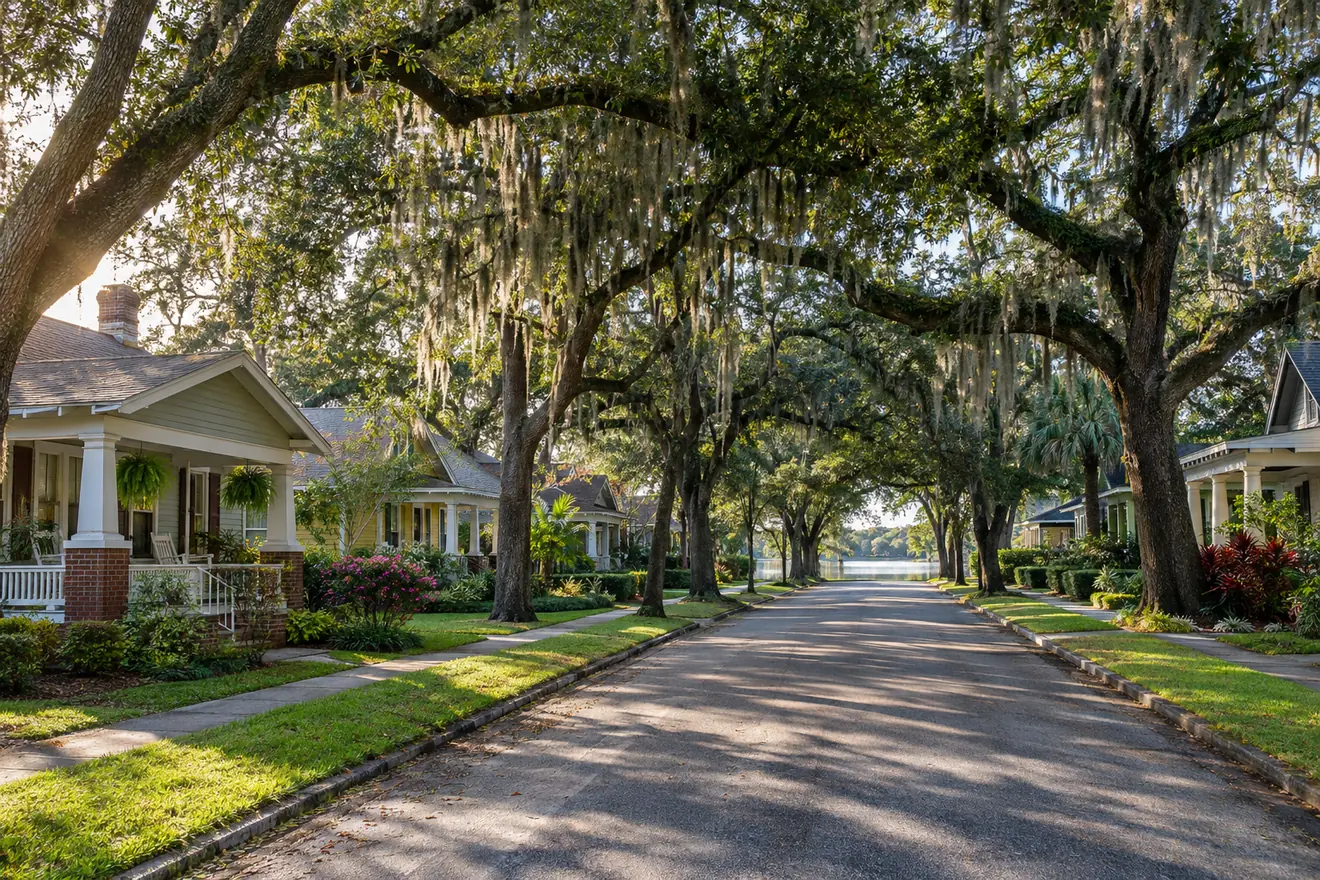
Orlando's reputation is built on theme parks and sunshine, but the people who actually call it home know a different city - one shaped by hundreds of natural lakes, a genuine arts and dining scene, and neighborhoods with real personalities that no tourism brochure bothers to capture. The population data underscores how much that city is changing. According to U.S. Census Bureau figures, the Orlando metro area added more than 76,000 new residents between July 2023 and July 2024, reaching a total population of roughly 2.94 million and ranking as the fastest-growing large metro in the United States among the country's 30 most populous regions. International migration now drives the majority of that growth, bringing families and professionals from Puerto Rico, Central America, Brazil, and beyond. The result is a metro that is genuinely diverse, genuinely dynamic, and genuinely harder to summarize than its theme park identity suggests.
That growth concentrates minds around one fundamental question: where to actually live. The answer is more complicated than any ranking list implies. Orlando's neighborhoods vary enormously in character, walkability, price, school quality, and proximity to major employment centers. A commute that looks manageable on a map can double in time once you encounter Interstate 4 at rush hour. A neighborhood with strong bones can be undermined by a school zone boundary, or elevated by a farmers market and a genuine block association culture. This guide focuses on the neighborhoods that local residents actually discuss when someone asks where to put down roots in Orlando - what defines each one, who tends to thrive there, the real trade-offs you will face, and the practical factors that cut across all of them regardless of which street you ultimately choose.
Thornton Park: Downtown Orlando's Most Walkable Village
Thornton Park is the answer to the question most people ask when they arrive in Orlando: does this city have a real neighborhood? It sits just east of downtown, centered on Central Boulevard and Washington Street along the eastern shore of Lake Eola, and it delivers something genuinely rare in Central Florida - a street life that exists independently of a parking lot.
The restaurants and bars along Central and Washington attract residents and visitors on foot from the surrounding blocks. The weekly farmers market at Lake Eola Park adds a Sunday ritual that gives the neighborhood an unhurried rhythm, and the park itself is central to Thornton Park's identity in a way that goes beyond simple proximity. Lake Eola's illuminated fountain is one of Orlando's most recognizable landmarks. The amphitheater hosts free concerts and cultural events throughout the year. The swan boats on the lake are more charming than they have any right to be for a city this size, and they have become a genuine piece of neighborhood life rather than a tourist gimmick.
The housing stock reinforces the neighborhood's premium character. Victorian-era bungalows and Craftsman cottages have been carefully restored on streets shaded by mature oaks, and newer condominium buildings fill gaps in the urban fabric and provide rental and purchase options for people who want the address without a detached home. The architectural character is genuine rather than manufactured, and the scale of the streets keeps it feeling like a neighborhood even as the bars and restaurants draw people in from across the metro on weekends.
The trade-offs are real. Thornton Park prices - for both renters and buyers - consistently sit above Orlando's median; check current listings for accurate figures, as Central Florida's market moves quickly. Parking is genuinely challenging on weekend evenings when restaurant traffic arrives from outside the neighborhood. And while Thornton Park itself is very safe by any reasonable measure, its position adjacent to downtown Orlando means situational awareness at late hours in certain directions still matters.
Who thrives here: young professionals, remote workers who value daily walkability, couples without children who want urban life with neighborhood character, and anyone for whom evening access to Lake Eola Park is part of what makes a home feel worth coming back to.
Mills 50: The City's Creative and Culinary Engine
The intersection of Mills Avenue and Colonial Drive (State Road 50) gives this district its name, and the name has become shorthand for a specific kind of Orlando energy - independent, multicultural, artsy, and pointedly non-corporate. Orlando Magazine has recognized Mills 50 as one of the city's great neighborhoods, a designation that feels accurate and slightly ironic at once, because the area's appeal has always been rooted in what it is not rather than any official recognition.
The Vietnamese and pan-Asian dining corridor along Colonial Drive is one of the most authentic concentrated food experiences in Central Florida. Family-operated restaurants that have served Orlando's Vietnamese-American community for decades sit alongside newer spots, independent coffee shops, galleries, and vintage retailers. The customer base skews heavily local rather than tourist-facing, which consistently produces more honest food at better prices than you find in areas oriented toward visitors. Bold murals on building exteriors give visual texture to the streetscape, and the indie-retail density on Mills Avenue makes for genuinely browsable blocks on a weekday afternoon.
Housing in Mills 50 runs more accessible than Thornton Park, though appreciation has been real as the neighborhood's reputation has extended beyond its original audience. The stock is a mix of older bungalows, duplexes, and apartment buildings - nothing particularly polished, which is part of the honest appeal. The neighborhood connects naturally to Audubon Park Garden District to the north, Colonialtown to the south, and downtown Orlando via the Colonial Drive corridor, giving it strong urban connectivity without requiring premium pricing for access.
Who thrives here: artists, food and beverage industry workers, creatives, younger renters who prioritize authenticity over package amenities, and anyone for whom independent business density matters more than manicured streetscapes.
Audubon Park Garden District: Orlando's Neighborly Heart
If Mills 50 has the energy, Audubon Park Garden District has the warmth. The Corrine Drive corridor anchors this neighborhood near the Winter Park border, and its collection of independent businesses has cultivated a degree of local loyalty that is unusual even by Orlando's standards. East End Market, a curated food hall on Corrine Drive showcasing local producers, chefs, and artisans, functions more like a community gathering point than a commercial operation. The surrounding blocks of mid-century residential homes have developed a visible garden culture - front yards planted with native species, neighbors who know each other by name, the kind of block-level community that survives in a metro this size only where people have genuinely chosen to build it.
The neighborhood developed in the mid-twentieth century partly in support of the nearby Naval Training Center Orlando and the former Orlando Air Force Base, and it has been evolving steadily since those chapters of the city's history closed. Audubon Park Elementary School within the neighborhood carries a strong community reputation. Harry P. Leu Gardens - a botanical garden and historic estate operated by the City of Orlando - is accessible from the neighborhood on foot or by bicycle and provides a genuinely beautiful public green space that residents use throughout the year.
The practical picture is favorable in multiple directions. Proximity to Winter Park gives residents access to Park Avenue dining and retail without paying Winter Park property taxes. SunRail's Winter Park station is reachable by bicycle for motivated commuters, providing a real alternative to driving for those whose employers are near a station stop. And the neighborhood's position between Mills 50 and the Winter Park border means dining, coffee, and cultural access in multiple directions without requiring a car for everything.
Who thrives here: young families, creative and service professionals, teachers, and anyone who prioritizes knowing their neighbors and supporting locally owned businesses over urban density or chain-retail convenience.
College Park: Brick Streets, Bungalows, and Edgewater Drive
College Park is one of Orlando's oldest continuously inhabited residential neighborhoods, running north of downtown along Edgewater Drive between Lake Ivanhoe and Lake Adair. The name comes from early developer marketing rather than any campus affiliation, but the neighborhood has earned its identity through a century of residential continuity that most of Orlando's planned communities simply cannot claim. The lakefronts of Ivanhoe and Adair give several streets genuine waterfront character without requiring the premium that most of Orlando's lake-access properties command.
Edgewater Drive functions as the neighborhood's main street: a walkable commercial strip of restaurants, independent shops, salons, and bars that serves the surrounding residential blocks rather than drawing destination visitors from across the metro. The side streets are brick-paved in places and shaded by the kind of mature tree canopy that takes generations to develop. The housing stock runs to Craftsman bungalows and Florida vernacular cottages built from the 1920s through the 1940s, many maintained to a high standard by owners who understand what they have. The Ivanhoe Village area on the southern edge adds a layer of creative retail and restaurant energy that has expanded substantially in recent years and given the neighborhood's border zone a stronger commercial identity of its own.
College Park occupies a transitional price point between the urban core neighborhoods and the premium pricing of Winter Park. Buyers who want historic architectural character without Thornton Park's downtown premium often land here. The neighborhood runs quieter after dark than Mills 50 or Thornton Park, which makes it more comfortable for families and early risers. Access to Interstate 4 is reasonable through several routes, though the Ivanhoe area has historically seen congestion during the evening commute.
Who thrives here: couples buying their first home with genuine architectural character, families who want a residential neighborhood with a walkable main street close by, and buyers willing to trade modern finishes for bones that cannot be replicated in newer construction.
Baldwin Park: New Urbanism on a Former Naval Base
Baldwin Park is built on the site of the former Naval Training Center Orlando, which closed in 1999 under the federal Base Realignment and Closure process. What replaced it is one of the most successful New Urbanism developments in Florida: a walkable, mixed-use neighborhood organized around a traditional street grid, a connected network of lakes and parks, and a mixed-use town center, located about four miles northeast of downtown Orlando.
The neighborhood's physical design is deliberate and distinctive. Homes sit close to the street with front porches facing sidewalks, alleys carry garages to the rear of lots, and the town center mixes retail, restaurant, and office space in a format that produces genuine foot traffic rather than parking-lot retail dynamics. The park and trail system is extensive by Orlando standards: residents can paddle on Village Lake, fish from community docks, jog the lakefront greenway loop, or use sports fields and playgrounds without entering traffic. Median home prices in Baldwin Park have been reported around $575,000 in recent market data - verify any current figure with a licensed real estate agent, as the Central Florida market shifts regularly and this number will not hold indefinitely.
The school options within and near Baldwin Park, including a well-regarded public elementary school within the neighborhood boundaries, make it consistently attractive to families with young children. The community association maintains common areas and enforces architectural standards, producing a consistently well-kept streetscape and occasionally generating the friction that any HOA governance tends to create regardless of how thoughtful the intent is.
Who thrives here: families with young children who prioritize school quality and park access, professionals who want a walkable planned neighborhood without living directly in downtown Orlando, and buyers who value maintained infrastructure and community organization over the organic character of older neighborhoods.
Dr. Phillips: Restaurant Row and Suburban Substance
Dr. Phillips occupies the southwestern part of the Orlando metro, roughly between the Universal Orlando Resort and the Windermere lakefront communities, straddling International Drive's southern extension and the Sand Lake Road corridor that locals call Restaurant Row. The name comes from the Phillips family, Florida citrus growers whose shift into real estate development left a visible imprint on this part of the city that persists decades later.
Restaurant Row is the neighborhood's most recognized asset. The stretch of Sand Lake Road west of Interstate 4 has grown over roughly two decades into one of the densest concentrations of independently operated and chef-driven restaurants in Central Florida - a wide range of cuisines and price points anchored by well-run operations that build repeat business rather than capturing one-time tourist traffic. For Dr. Phillips residents, high-quality dining access is a daily given rather than a destination trip. Proximity to Universal Orlando, SeaWorld, and the International Drive corridor is genuinely convenient for hospitality workers and puts a number of Orlando's largest entertainment employers within a manageable commute. It also means the neighborhood exists visually within the tourism landscape in a way that the urban core neighborhoods do not.
The housing stock is predominantly single-family homes built from the 1970s through the 1990s, running larger than comparable urban core properties, with private pools common on single-family lots. Dr. Phillips High School has built a strong academic reputation over several decades and remains a meaningful draw for families researching school options, attracting buyers from outside the immediate area through the district's choice system.
Who thrives here: families who prioritize school quality and restaurant access over urban walkability, hospitality and tourism industry workers who need proximity to the I-Drive corridor, and buyers who want a well-established suburban neighborhood with upside from its position near major employers and entertainment infrastructure.
Lake Nona: The Medical City and the Planned Future
Lake Nona is genuinely unusual among Orlando neighborhoods - a master-planned community of considerable ambition built largely on former agricultural land in southeast Orlando by Tavistock Development Company. Its anchor is the Medical City campus: a roughly 650-acre health and life sciences cluster that houses the UCF College of Medicine, Nemours Children's Hospital, the Veterans Affairs Medical Center, and AdventHealth facilities, all within a compact geography. That concentration of healthcare institutions gives Lake Nona a resident base of physicians, researchers, nurses, and administrators that shapes the neighborhood's character in visible ways - the population skews highly educated and tends to arrive for professional reasons as much as lifestyle preference.
Reported median home prices around $785,000 place Lake Nona among the most expensive markets within the Orlando city limits - verify any current figure with a local agent, as the southeast Orlando market has moved quickly during the broader metro's growth surge. The infrastructure quality is demonstrably high by Orlando standards: wide sidewalks, connected parks and trail systems, newer road construction, a town center with retail and dining, and a deliberate integration of technology into community systems. Orlando International Airport's position closer to Lake Nona than to most other central neighborhoods is a practical asset for frequent travelers and a significant draw for airline and airport-adjacent employers.
The critique you will hear from longtime Orlandoans is that Lake Nona lacks the character that develops with age - that its planned completeness produces a corporate cleanliness without the organic development that makes a neighborhood feel inhabited rather than installed. That critique has merit, and it is also partly a function of the community's relative youth. The personality is still forming, and the next decade will determine whether it develops the kind of deep local culture that Mills 50 or Audubon Park have built over time.
Who thrives here: healthcare professionals employed within the Medical City cluster, families who value new construction and planned recreational infrastructure, frequent travelers for whom a short drive to MCO matters, and remote workers willing to pay a premium for modern and well-maintained surroundings.
Winter Park: The Gold Standard (With a Price to Match)
Winter Park is technically a separate municipality from Orlando - it has its own city commission, police department, utility system, and school district. No honest guide to where to live in the Orlando area can exclude it, because Park Avenue is what the region's residents picture when they imagine the best version of their metro, and that picture is accurate.
Park Avenue is a genuine pedestrian main street: independent boutiques, established restaurants, national retailers executed at human scale, outdoor cafe seating along Central Park's median, and the Cornell Fine Arts Museum at the Rollins College campus anchoring the southern end. The park itself provides a continuous green corridor through the commercial district that gives the whole stretch a rare sense of unhurried space for a Florida city. Hannibal Square, just west of Park Avenue, has its own distinct dining and retail scene with a different, more community-rooted character that developed organically alongside the main drag's higher profile. The SunRail Winter Park station near Park Avenue connects weekday commuters to downtown Orlando, an underused asset for residents whose employers align with the rail corridor.
The residential streets of Winter Park are among the most architecturally distinguished in Central Florida. The chain of connected lakes running through the city - including Lake Osceola, Lake Virginia, and Lake Maitland - provides boating access and waterfront real estate that commands prices at the top of the metro's range. Winter Park's independent school system maintains a collectively strong reputation across multiple schools. Reported median home prices around $461,000 represent a directional baseline that should be verified for current accuracy; waterfront and Park Avenue-adjacent properties typically sit well above any metro-wide median figure.
Who thrives here: established professionals and executives, families who prioritize school quality and walkable retail, empty nesters ready to trade a large suburban home for neighborhood quality, and buyers with the budget to access one of Florida's most consistently high-performing residential markets.
Windermere: Lakes, Space, and Affluent Quiet
Windermere is an unincorporated community in Orange County, with a small incorporated town center, that sits on a peninsula in the Butler Chain of Lakes roughly 15 miles southwest of downtown Orlando and about six miles from Walt Disney World's eastern boundary. What it is known for is space, water, and a residential calm that metro-adjacent living rarely provides. Large lots, private lake access, and a landscape of mature trees define the area in a way that is genuinely distinct from any other part of the Orlando market.
The Butler Chain of Lakes is the neighborhood's defining feature. Designated Outstanding Florida Waters by the state for its environmental quality, the chain connects multiple named lakes - including Lake Butler, Lake Tibet, Lake Down, and Lake Chase - through navigable canals that allow boaters to move between bodies of water without returning to land. Fishing, waterskiing, paddleboarding, and recreational boating are ordinary parts of daily life for Windermere residents rather than weekend excursions that require advance planning. The housing ranges from established lakefront estates built in earlier decades to newer gated communities with contemporary construction. Some of the most expensive residential properties in the Orlando market sit on these lakefronts, and the combination of privacy and water access has long attracted high-profile buyers including professional athletes and corporate executives.
The practical trade-off is near-total car dependence and meaningful distance from the urban core. There are no walkable errands in Windermere. Commutes to downtown Orlando or to employers on the east side of the metro, such as UCF or the Lake Nona Medical City, can be time-consuming, particularly when I-4 and the Walt Disney World resort corridor are congested. Disney's proximity cuts both ways: convenient for theme park employees, but theme park traffic affects surrounding roads on peak days and throughout the busy tourist seasons.
Who thrives here: families who have decided that private lake access and generous lot sizes are worth the trade-off of car dependence, water sports enthusiasts who want recreational boating as a daily option, and buyers for whom genuinely quiet, lakefront living is the primary goal rather than a secondary amenity.
Colonialtown and the Milk District: The Affordable Urban Option
Colonialtown sits just north of Mills 50, straddling the Colonial Drive corridor, and encompasses several micro-neighborhoods - Colonialtown North, Colonialtown South, and the Milk District - each with slightly different personalities held together by a shared preference for locally owned businesses and genuine neighborhood character over chain-dominated commercial strips. Of all the neighborhoods in Orlando's urban core, this cluster offers the most accessible entry points for renters and buyers who want urban proximity without premium pricing.
The Milk District, which takes its name from a dairy processing facility that long operated in the area, has grown into one of Orlando's more interesting evening destinations for locals. The cluster of independent bars, restaurants, and creative businesses along East Robinson Street and the surrounding blocks draws a neighborhood-first crowd and has developed a genuine scene rather than a manufactured one. The ongoing adaptive reuse of former industrial and commercial buildings in the area reflects the broader pattern that has driven Orlando's urban core evolution over the past decade, and it gives the Milk District a sense of physical history that purely residential neighborhoods lack.
Housing in Colonialtown is meaningfully more affordable than Thornton Park, Baldwin Park, or College Park while maintaining genuine proximity to downtown, Mills 50, and the restaurant and arts corridors that have expanded along the Colonial Drive spine. The housing stock is older and less consistently maintained than in premium neighborhoods, which explains both the lower price points and the rough-around-the-edges character that has kept the area accessible to artists, service workers, and first-time buyers who would be priced out elsewhere. That accessibility is not a flaw - it is the mechanism by which the neighborhood retains the local character that makes it worth living in rather than just visiting.
Who thrives here: renters on tighter budgets who want urban access without urban-premium pricing, first-time buyers willing to trade finish quality for location and community, and anyone who wants to live embedded in Orlando's working local culture rather than simply observing it from a more polished distance.
Practical Factors That Apply to Every Orlando Neighborhood
Interstate 4 and the Commute Reality
Interstate 4 runs diagonally through the Orlando metro from southwest to northeast, and it functions as both the region's spine and its most consistent source of daily frustration. Traffic on the central stretch, particularly between the Lee Road interchange and the downtown core, has historically ranked among the worst in Florida. Before committing to any neighborhood, drive your intended commute during actual rush hours - not on a weekend afternoon, not based on a mapping app estimate, but in a car at 8 a.m. and 5:30 p.m. on a typical weekday. A 12-mile drive that looks simple can take 45 minutes or more in either direction, and that is 45 minutes you will spend every day.
SunRail, the commuter rail line running from DeLand in Volusia County south through downtown Orlando to Poinciana in Osceola County, provides a real alternative for commuters whose employers are near a station. The service is reliable on weekdays and avoids the I-4 variable entirely. Its geographic coverage is limited, and there is no weekend service, which restricts its usefulness as a primary household transportation mode. For workers near a station, however, it is a genuinely underused asset worth taking seriously before writing off rail commuting as impractical in this metro.
Property Insurance and Flood Zones
Florida's property insurance market has experienced significant disruption in recent years. Multiple carriers have exited the state, leaving Citizens Property Insurance - the state-backed insurer of last resort - absorbing a growing share of the market. Rates have risen materially. Orlando's inland position protects it from hurricane storm surge risk, but flood zones exist throughout the metro near the many lakes and drainage corridors, including the Shingle Creek basin in southern Orange County and the Econlockhatchee River watershed to the east.
Before purchasing any property in the Orlando area, verify its FEMA flood zone designation independently and request complete insurance quotes for both homeowners and flood coverage before going under contract. Do not treat insurance as a line item to calculate after you have fallen in love with a house. These costs are primary budget inputs, and in Florida's current insurance environment, they can meaningfully change the financial picture of an otherwise attractive property.
Schools and the Orange County Choice System
Orange County Public Schools governs the district for the city of Orlando and operates a school-choice and magnet program system alongside traditional attendance-zone assignments. A student in a given neighborhood is not necessarily limited to the zoned school, but competitive magnet programs require applications, and seats are not guaranteed. Families who prioritize specific schools should apply early, understand the waitlist dynamics, and speak directly with parents currently enrolled rather than relying on historical ratings that may not reflect current conditions. Winter Park operates its own independent city school system. Families for whom school quality is a decisive factor should check current ratings directly through the Florida Department of Education and visit schools in person before making a neighborhood commitment.
Frequently Asked Questions
What is the best neighborhood in Orlando for young professionals?
Thornton Park and Mills 50 consistently attract young professionals for different reasons. Thornton Park offers the most walkable urban lifestyle, with Lake Eola Park and a dense restaurant and bar scene within walking distance of residential streets. Mills 50 draws those who prioritize independent businesses, a creative community, and lower housing costs. If budget is the primary concern, Colonialtown and the Milk District offer similar urban access at meaningfully lower price points than either of the premium options.
Is Orlando a good city to raise a family?
Orlando has strong family-oriented options, though quality varies significantly by neighborhood and school choice. Baldwin Park, Dr. Phillips, and Winter Park are consistently cited by family residents for their school reputations, park access, and community character. Lake Nona's newer planned infrastructure also draws large numbers of families in the medical and professional fields. Orange County's school-choice and magnet program system means your options extend beyond your immediate attendance zone, but acceptance is competitive and seats are not guaranteed.
What is the most walkable neighborhood in Orlando?
Thornton Park is the most genuinely walkable neighborhood in the city of Orlando, where daily errands, dining, coffee, and Lake Eola Park are all accessible on foot from residential streets. Audubon Park Garden District and Mills 50 are also walkable for dining and retail, though most grocery shopping still requires a car. By national walkability standards, Orlando remains a car-dependent metro, but these three neighborhoods offer the most authentic pedestrian experience the city currently provides.
How does I-4 traffic affect where I should live in Orlando?
Significantly and directly. A distance that looks manageable on a map can become a 45-minute commute on I-4 during peak hours. If you work downtown or on the east side of the metro, neighborhoods far west like Windermere add real daily friction. The best approach is to drive your intended commute during actual rush hours before signing a lease or making an offer. Many Orlando residents who underestimate I-4 come to regret a neighborhood they otherwise love - do not let a convenient weekend drive mislead you about what your workday will actually look like.
Which Orlando neighborhoods have the best outdoor and lake access?
Windermere is the top choice for recreational lake access, with the Butler Chain of Lakes - designated Outstanding Florida Waters by the state - providing navigable boating, fishing, and watersports across connected lakes including Lake Butler, Lake Tibet, Lake Down, and Lake Chase. Baldwin Park has the most integrated park and greenway system within an urban planned neighborhood. For access to wild state parks and river springs, properties on the metro's western edge near the Green Swamp or north toward the Wekiva River basin offer the shortest drives to genuinely natural landscapes.
Should I rent before buying in Orlando if I'm relocating from out of state?
For almost anyone relocating from outside Central Florida, renting in your target neighborhood for six to twelve months before buying is nearly always the right call. Commute realities only become clear through lived experience across different seasons. Micro-differences between neighborhoods that look similar on paper become obvious quickly once you are on the ground. Renting first also lets you experience a full Florida summer and understand the homeowners insurance environment before taking on a purchase and the obligations that come with it in this market.
Orlando Headlines covers local news, neighborhood developments, new business openings, and community stories across the greater Orlando area. If you are exploring a specific part of the city or want a closer look at what is happening in any of these neighborhoods, reach out through our contact page and we will point you toward the local resources and current coverage that can help.